Halo, saya Hello, I am

Adi Rizky Pratama

Saya seorang I am a

Dosen Teknik Informatika di UBP Karawang sekaligus Programmer Freelance. Menggabungkan riset akademis di bidang AI & Machine Learning dengan pengembangan solusi teknologi nyata untuk industri. Lecturer of Informatics Engineering at UBP Karawang and a Freelance Programmer. Combining academic research in AI & Machine Learning with the development of real-world technology solutions for industry.

6+
Publikasi Publications
50+
Sitasi Citations
10+
Proyek Projects
Dosen & Peneliti Lecturer & Researcher
Full-Stack Dev Full-Stack Dev
AI / ML AI / ML
Geser untuk efek 3D Drag for 3D effect
Adi Rizky Pratama

Akademisi yang Melek Industri Industry-Savvy Academician

Sebagai dosen di Program Studi Teknik Informatika Universitas Buana Perjuangan Karawang, saya mengajar dan meneliti di bidang kecerdasan buatan, pengolahan citra, dan pengembangan aplikasi. Di sisi lain, pengalaman sebagai programmer freelance memungkinkan saya menjembatani teori dan praktik — menghadirkan solusi teknologi yang didasari riset ilmiah yang kuat. As a lecturer in the Informatics Engineering Study Program at Universitas Buana Perjuangan Karawang, I teach and conduct research in artificial intelligence, image processing, and application development. On the other hand, my experience as a freelance programmer allows me to bridge theory and practice — delivering technology solutions built on robust scientific research.

Menjabat sebagai Kepala Pusat Data dan Informasi (PUSDATIN) UBP Karawang, saya terbiasa memimpin proyek digitalisasi skala besar dan berkolaborasi lintas tim. Serving as the Head of the Center for Data and Information (PUSDATIN) at UBP Karawang, I am accustomed to leading large-scale digitalization projects and collaborating across teams.

Dosen Tetap Full-time Lecturer

Teknik Informatika, UBP Karawang Informatics Engineering, UBP Karawang

Riset AI & ML AI & ML Research

CNN, LSTM, k-NN, OCR

Kepala PUSDATIN Head of PUSDATIN

Digitalisasi & Data Center Digitalization & Data Center

Freelance Dev Freelance Dev

Web & Mobile Applications Web & Mobile Applications

Apa yang Bisa Saya Bantu? How Can I Help You?

Menggabungkan keahlian akademis dan pengalaman industri untuk memberikan solusi terbaik. Combining academic expertise and industry experience to deliver the best solutions.

Software Development

Pengembangan aplikasi web & mobile custom sesuai kebutuhan bisnis Anda. Dari landing page hingga sistem enterprise. Custom web & mobile application development tailored to your business needs. From landing pages to enterprise systems.

IT Consulting

Konsultasi arsitektur sistem, pemilihan teknologi, transformasi digital, dan optimasi infrastruktur IT. Consulting on system architecture, technology stack selection, digital transformation, and IT infrastructure optimization.

Corporate Training

Pelatihan pemrograman, data science, dan AI untuk tim korporat maupun institusi pendidikan. Programming, data science, and AI training for corporate teams and educational institutions.

Research Collaboration

Kolaborasi riset di bidang machine learning, computer vision, dan data mining untuk publikasi ilmiah. Research collaboration in machine learning, computer vision, and data mining for scientific publications.

Tech Stack yang Dikuasai Mastered Tech Stack

HTML5
CSS3
JavaScript
Bootstrap
PHP
Laravel
Node.js
Python
TensorFlow
Keras
MySQL
PostgreSQL
Git & GitHub

Tri Dharma Perguruan Tinggi Three Pillars of Higher Education

Pengajaran, penelitian, dan pengabdian masyarakat sebagai fondasi kontribusi ilmiah. Teaching, research, and community service as the foundation of scientific contribution.

Mata Kuliah yang Diampu Courses Taught

Pemrograman Web Web Programming
Kecerdasan Buatan Artificial Intelligence
Machine Learning Machine Learning
Pengolahan Citra Digital Digital Image Processing
Basis Data Database Systems
Pemrograman Mobile Mobile Programming

Pengabdian Masyarakat Community Service

Digitalisasi UMKM melalui implementasi e-learning, QRIS, dan sistem informasi untuk pelaku usaha mikro di Karawang. Digitalization of MSMEs through the implementation of e-learning, QRIS, and information systems for micro-businesses in Karawang.

Highlight Publikasi Riset Research Publication Highlights

1

Penggunaan media pembelajaran Wordwall untuk meningkatkan minat dan motivasi belajar siswa The use of Wordwall learning media to improve students' interest and learning motivation

Zahro, N. A. Q., & Pratama, A. R.

50+ Sitasi 50+ Citations Jurnal Journal
2

Perbandingan Algoritma Apriori Dan FP-Growth Terhadap Market Basket Analysis Comparison of Apriori and FP-Growth Algorithms for Market Basket Analysis

Fathurrahman, M., Pratama, A. R., & Al-Mudzakir, T.

Data Mining Jurnal Journal
3

Implementasi CNN Untuk Klasifikasi Citra Kemasan Kardus Defect dan No Defect CNN Implementation for Defect and No Defect Cardboard Box Image Classification

Antoni, A., Rohana, T., & Pratama, A. R.

Computer Vision CNN

Proyek & Hasil Karya Projects & Creative Works

Koleksi proyek dari dunia akademik, freelance, dan open source. A collection of projects from academic, freelance, and open-source fields.

Memuat proyek... Loading projects...

Pengalaman & Pendidikan Experience & Education

Perjalanan karir di dunia akademik dan industri teknologi. Career journey in the academic world and technology industry.

Akademik Academic 2018 — Sekarang 2018 — Present

Dosen Tetap Full-time Lecturer

Universitas Buana Perjuangan Karawang

Mengajar mata kuliah Pemrograman Web, AI, Machine Learning, dan membimbing riset mahasiswa di Program Studi Teknik Informatika. Teaching Web Programming, AI, Machine Learning, and supervising student research in the Informatics Engineering Study Program.

Freelance Freelance 2019 — Sekarang 2019 — Present

Freelance Web Programmer Freelance Web Programmer

Berbagai Klien & Proyek Various Clients & Projects

Mengembangkan aplikasi web dan mobile untuk klien dari berbagai industri. Spesialisasi di PHP/Laravel, JavaScript, dan Python. Developing web and mobile applications for clients across various industries. Specializing in PHP/Laravel, JavaScript, and Python.

Akademik Academic 2018 — Sekarang 2018 — Present

Kepala PUSDATIN Head of PUSDATIN

UBP Karawang

Memimpin Pusat Data dan Informasi universitas. Mengelola infrastruktur IT, sistem informasi akademik, dan digitalisasi kampus. Leading the university's Center for Data and Information. Managing IT infrastructure, academic information systems, and campus digitalization.

Pengabdian Service 2021 — Sekarang 2021 — Present

Digitalisasi UMKM MSME Digitalization

Karawang & Sekitarnya Karawang & Surrounding Areas

Program pengabdian masyarakat: pelatihan IT, implementasi e-learning dan QRIS untuk pelaku usaha mikro. Community service program: IT training, e-learning implementation, and QRIS integration for micro-businesses.

Pendidikan Education 2015 — 2017

S2 — Magister Teknik Informatika Master of Informatics Engineering

Universitas / Institusi University / Institution

Fokus studi pada kecerdasan buatan, pengolahan citra, dan machine learning. Study focus on artificial intelligence, image processing, and machine learning.

Pendidikan Education 2011 — 2015

S1 — Sarjana Teknik Informatika Bachelor of Informatics Engineering

Universitas / Institusi University / Institution

Fondasi keilmuan di bidang pemrograman, basis data, jaringan komputer, dan rekayasa perangkat lunak. Foundational knowledge in programming, databases, computer networks, and software engineering.

Hubungi Saya Contact Me

Ada proyek, kolaborasi riset, atau pertanyaan? Jangan ragu untuk menghubungi. Have a project, research collaboration, or question? Feel free to reach out.

Mari Berkolaborasi! Let's Collaborate!

Saya selalu terbuka untuk peluang kolaborasi, baik di bidang akademik maupun pengembangan software. Silakan hubungi saya melalui platform berikut. I am always open to collaboration opportunities, both in the academic sphere and software development. Please contact me through the platforms below.
Advertisement
Responsive Ad Unit (Top Banner)

Rabu, 08 Juli 2026

OpenDataLoader: An Open-Source PDF Parser Relevant to Modern AI Workflows

OpenDataLoader: An Open-Source PDF Parser Relevant to Modern AI Workflows

OpenDataLoader: An Open-Source PDF Parser Relevant to Modern AI Workflows

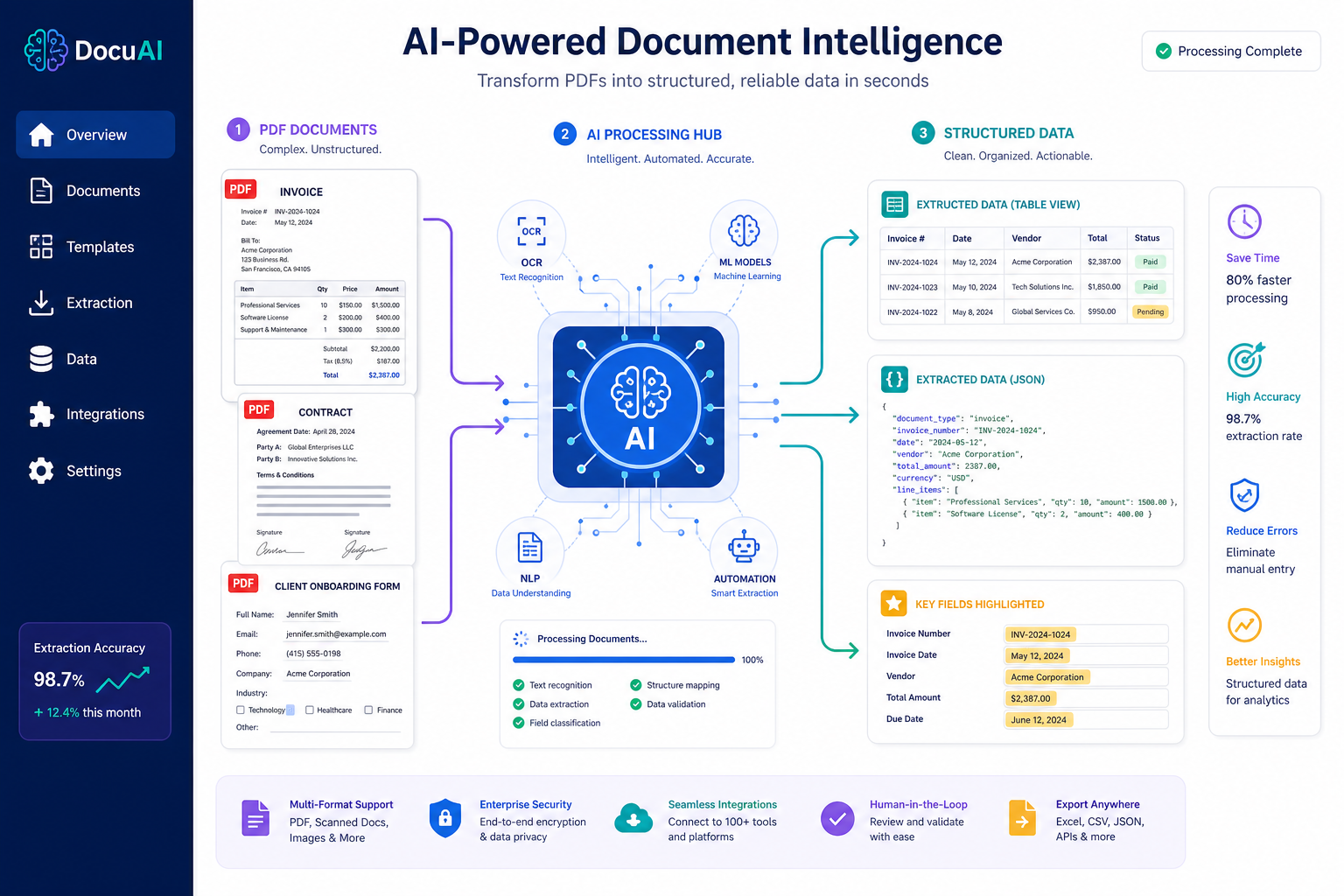
PDF documents remain one of the most common data sources in companies: reports, contracts, invoices, technical manuals, research papers, and archives of internal policies. The problem is that PDFs were not designed to be “understood” by machines. They were designed to be read by humans. This is where OpenDataLoader https://opendataloader.org/ becomes important.

OpenDataLoader is an open-source PDF parser that helps transform PDF documents into data that is more structured, cleaner, and more ready to be used in AI systems. For teams building applications based on LLMs or RAG (Retrieval-Augmented Generation), the ability to accurately extract content from PDFs is no longer an extra feature, but a foundation.

What Is OpenDataLoader and Why It Matters for AI

Defining OpenDataLoader as an Open-Source PDF Parser

OpenDataLoader is an open-source tool for reading, extracting, and reconstructing PDF content into formats that are easier for modern applications to process. Its main focus is not merely extracting raw text, but also understanding the document structure: headings, paragraphs, tables, reading order, and visual elements that affect context.

This approach matters because poor PDF parsing results will directly reduce the quality of downstream systems. If text is cut off, tables are disorganized, or the content order is chaotic, then embeddings, indexing, and AI model responses will also deteriorate.

As an open-source project, OpenDataLoader offers two major advantages:

  • transparency in how data is processed
  • flexibility to adapt it to internal pipeline needs

For engineering teams, this means greater control compared to closed solutions that are often difficult to audit or limited by vendors.

The Role of OpenDataLoader in LLM and RAG Workflows

In AI workflows, a PDF parser sits at the earliest layer: ingestion. At this stage, input quality determines output quality.

OpenDataLoader’s role in LLM and RAG pipelines typically includes:

  • extracting text from PDFs in a more structured way
  • preserving relationships between document sections
  • identifying tables and key information blocks
  • producing output ready to be chunked, embedded, and indexed
  • helping preserve context when data is used for retrieval

For RAG systems, this is extremely critical. RAG depends on the ability to find the right pieces of information from a knowledge base. If the parser fails to read the document structure properly, the retrieval engine may pull the wrong context. As a result, the model’s answer may sound convincing but miss the actual content of the original document.

In short, OpenDataLoader helps bridge static documents into knowledge sources that AI can truly use.

Key OpenDataLoader Features for Accurate PDF Parsing

Algorithms for Reading Structure, Tables, and Bounding Boxes

One of the biggest challenges in PDF parsing is the fact that many PDFs do not have a clean logical structure. What is often available is only the visual coordinates of text and page elements. Therefore, a good parser must be able to read the layout, not just the characters.

OpenDataLoader stands out through its ability to handle several important aspects below:

  • document structure reading
    The system attempts to recognize headings, subheadings, paragraphs, lists, and reading order so that extraction results do not feel random.
  • table extraction
    Tables are components that often break during parsing. OpenDataLoader focuses on preserving row and column relationships so numerical or categorical data remains meaningful.
  • bounding boxes
    Coordinate information for each page element is useful for position tracking, visual grounding, relabeling, and integration with document annotation systems.
  • layout-aware parsing
    This helps when documents have complex formats such as two columns, footnotes, headers/footers, or separated information blocks.

For AI developers, these features are not just “cleaner formatting.” They determine whether a document can be used for precise knowledge retrieval or not.

Local Processing, Data Privacy, and PDF Auto-Tagging

Many organizations want to leverage AI while remaining cautious about data privacy. The PDFs being processed often contain sensitive information: customer data, legal documents, financial reports, or internal company materials.

That is why local processing is an important advantage. By running the parser in their own environment, teams can:

  • reduce dependence on third-party cloud services
  • maintain compliance with data security policies
  • retain full control over document processing workflows
  • minimize the risk of data leakage during ingestion

In addition, PDF auto-tagging helps add labels or metadata to parsing results. This is useful for:

  • document classification
  • tagging important sections
  • content filtering before indexing
  • grouping documents for different AI pipelines

In practice, the combination of accurate parsing, local processing, and auto-tagging makes OpenDataLoader suitable for both enterprise and research needs.

Integrating OpenDataLoader with the AI Development Ecosystem

Support for LangChain, LlamaIndex, and AI-Ready Output Formats

The value of a parser does not end with extraction. It also needs to fit easily into the AI tool ecosystem already used by development teams.

OpenDataLoader is relevant because its parsing results can be directed into AI-ready formats. This means the output is easier to use for:

  • document chunking
  • embedding generation
  • indexing into vector databases
  • metadata-based retrieval
  • grounding for document chatbots

In the context of integration, support for or compatibility with frameworks such as LangChain and LlamaIndex is highly important. Both are widely used to build production-grade LLM applications, especially those involving document ingestion and retrieval.

With a parser that produces clear structure, clean metadata, and sensible document segmentation, integration into LangChain or LlamaIndex becomes much simpler. Teams do not need to spend as much time manually cleaning extraction results before they enter the embedding pipeline.

Availability of Python, Java, and Node.js SDKs

Programming language flexibility also determines how quickly a tool is adopted. OpenDataLoader becomes more attractive if it provides SDKs for several popular stacks such as:

  • Python for data engineering, machine learning, and AI pipelines
  • Java for integration into enterprise systems
  • Node.js for web applications, lightweight backends, and modern API services

The availability of cross-language SDKs supports several scenarios at once:

  • data teams prepare ingestion pipelines in Python
  • backend teams connect the parser to internal Java-based services
  • product teams build upload interfaces and document processing via Node.js

In other words, OpenDataLoader is not only suitable for experimentation, but is also easier to bring into heterogeneous production environments.

OpenDataLoader on GitHub, Licensing, and How to Get Started

The Official OpenDataLoader PDF Repository on GitHub

As an open-source project, the best starting point is of course the official OpenDataLoader PDF repository on GitHub https://github.com/opendataloader-project/opendataloader-pdf. There, developers can usually find:

  • installation documentation
  • basic usage guides
  • integration examples
  • issue tracker
  • feature roadmap
  • community contributions

Before adopting it, it is worth checking several things:

  • how actively the repository is updated
  • the quality of the documentation
  • the number of open issues and maintainer responsiveness
  • examples of parsing output for different types of PDFs
  • support for specific needs such as tables, OCR, or metadata

This step is important so that teams are not only drawn to feature claims, but also understand the project’s readiness for real-world use.

A typical initial workflow looks like this:

git clone https://github.com/opendataloader-project/opendataloader-pdf.git
cd <project-directory>

Then install the dependencies according to the project instructions:

pip install -r requirements.txt

Or if it is available as a package:

pip install opendataloader

A simple usage example in Python usually follows a pattern like this:

from opendataloader import PDFLoader

loader = PDFLoader("document.pdf")
result = loader.parse()

print(result)

Important note: package names, classes, and methods may differ depending on the official implementation in the repository. Always follow the latest documentation from the project’s GitHub page.

Apache 2.0 License and Open-Source Contribution Opportunities

If OpenDataLoader uses the Apache 2.0 license, that is a positive signal for many organizations. This license is generally friendly to commercial use and provides broad room for modification, distribution, and integration into internal or external products.

The advantages of the Apache 2.0 license include:

  • it can be used in commercial contexts
  • it supports code modification based on specific needs
  • it is safer for organizations that need licensing clarity
  • it makes adoption easier in enterprise projects

In addition to being users, technical teams can also view OpenDataLoader as an open-source contribution opportunity. Contribution areas may include:

  • improving table parsing accuracy
  • support for additional document formats
  • optimizing parsing performance
  • adding connectors to AI frameworks
  • improving documentation and usage examples
  • handling edge cases for complex PDF layouts

Contributions like these not only help the community, but also provide direct benefits to organizations that rely on the parser in their workflows.

Conclusion

OpenDataLoader occupies an important position in document-based AI workflows. It is not merely a text extraction tool, but a component that determines whether PDFs can be transformed into data sources that are truly useful for LLMs, RAG, and knowledge retrieval systems.

Its strength lies in the combination of several things that are highly needed today: open-source, structured parsing, support for tables and bounding boxes, local processing for privacy, and easy integration into the modern AI ecosystem.

For teams that frequently work with PDFs and want to build more reliable AI pipelines, OpenDataLoader is worth considering from the ingestion stage onward. In many cases, AI quality does not begin with the model you choose, but with how well the source documents are read from the start.

This article was written by artificial intelligence (AI) using the gpt-5.4 model via SumoPod AI.

This article was translated by Artificial Intelligence (AI) using gpt-5.4 via SumoPod AI.

Tidak ada komentar:

Posting Komentar

Dosen Teknik Informatika di UBP Karawang sekaligus Programmer Freelance. Menggabungkan riset akademis di bidang AI & Machine Learning dengan pengembangan solusi teknologi nyata untuk industri.

Cari Blog Ini

Diberdayakan oleh Blogger.

Arsip Blog