Halo, saya Hello, I am

Adi Rizky Pratama

Saya seorang I am a

Dosen Teknik Informatika di UBP Karawang sekaligus Programmer Freelance. Menggabungkan riset akademis di bidang AI & Machine Learning dengan pengembangan solusi teknologi nyata untuk industri. Lecturer of Informatics Engineering at UBP Karawang and a Freelance Programmer. Combining academic research in AI & Machine Learning with the development of real-world technology solutions for industry.

6+
Publikasi Publications
50+
Sitasi Citations
10+
Proyek Projects
Dosen & Peneliti Lecturer & Researcher
Full-Stack Dev Full-Stack Dev
AI / ML AI / ML
Geser untuk efek 3D Drag for 3D effect
Adi Rizky Pratama

Akademisi yang Melek Industri Industry-Savvy Academician

Sebagai dosen di Program Studi Teknik Informatika Universitas Buana Perjuangan Karawang, saya mengajar dan meneliti di bidang kecerdasan buatan, pengolahan citra, dan pengembangan aplikasi. Di sisi lain, pengalaman sebagai programmer freelance memungkinkan saya menjembatani teori dan praktik — menghadirkan solusi teknologi yang didasari riset ilmiah yang kuat. As a lecturer in the Informatics Engineering Study Program at Universitas Buana Perjuangan Karawang, I teach and conduct research in artificial intelligence, image processing, and application development. On the other hand, my experience as a freelance programmer allows me to bridge theory and practice — delivering technology solutions built on robust scientific research.

Menjabat sebagai Kepala Pusat Data dan Informasi (PUSDATIN) UBP Karawang, saya terbiasa memimpin proyek digitalisasi skala besar dan berkolaborasi lintas tim. Serving as the Head of the Center for Data and Information (PUSDATIN) at UBP Karawang, I am accustomed to leading large-scale digitalization projects and collaborating across teams.

Dosen Tetap Full-time Lecturer

Teknik Informatika, UBP Karawang Informatics Engineering, UBP Karawang

Riset AI & ML AI & ML Research

CNN, LSTM, k-NN, OCR

Kepala PUSDATIN Head of PUSDATIN

Digitalisasi & Data Center Digitalization & Data Center

Freelance Dev Freelance Dev

Web & Mobile Applications Web & Mobile Applications

Apa yang Bisa Saya Bantu? How Can I Help You?

Menggabungkan keahlian akademis dan pengalaman industri untuk memberikan solusi terbaik. Combining academic expertise and industry experience to deliver the best solutions.

Software Development

Pengembangan aplikasi web & mobile custom sesuai kebutuhan bisnis Anda. Dari landing page hingga sistem enterprise. Custom web & mobile application development tailored to your business needs. From landing pages to enterprise systems.

IT Consulting

Konsultasi arsitektur sistem, pemilihan teknologi, transformasi digital, dan optimasi infrastruktur IT. Consulting on system architecture, technology stack selection, digital transformation, and IT infrastructure optimization.

Corporate Training

Pelatihan pemrograman, data science, dan AI untuk tim korporat maupun institusi pendidikan. Programming, data science, and AI training for corporate teams and educational institutions.

Research Collaboration

Kolaborasi riset di bidang machine learning, computer vision, dan data mining untuk publikasi ilmiah. Research collaboration in machine learning, computer vision, and data mining for scientific publications.

Tech Stack yang Dikuasai Mastered Tech Stack

HTML5
CSS3
JavaScript
Bootstrap
PHP
Laravel
Node.js
Python
TensorFlow
Keras
MySQL
PostgreSQL
Git & GitHub

Tri Dharma Perguruan Tinggi Three Pillars of Higher Education

Pengajaran, penelitian, dan pengabdian masyarakat sebagai fondasi kontribusi ilmiah. Teaching, research, and community service as the foundation of scientific contribution.

Mata Kuliah yang Diampu Courses Taught

Pemrograman Web Web Programming
Kecerdasan Buatan Artificial Intelligence
Machine Learning Machine Learning
Pengolahan Citra Digital Digital Image Processing
Basis Data Database Systems
Pemrograman Mobile Mobile Programming

Pengabdian Masyarakat Community Service

Digitalisasi UMKM melalui implementasi e-learning, QRIS, dan sistem informasi untuk pelaku usaha mikro di Karawang. Digitalization of MSMEs through the implementation of e-learning, QRIS, and information systems for micro-businesses in Karawang.

Highlight Publikasi Riset Research Publication Highlights

1

Penggunaan media pembelajaran Wordwall untuk meningkatkan minat dan motivasi belajar siswa The use of Wordwall learning media to improve students' interest and learning motivation

Zahro, N. A. Q., & Pratama, A. R.

50+ Sitasi 50+ Citations Jurnal Journal
2

Perbandingan Algoritma Apriori Dan FP-Growth Terhadap Market Basket Analysis Comparison of Apriori and FP-Growth Algorithms for Market Basket Analysis

Fathurrahman, M., Pratama, A. R., & Al-Mudzakir, T.

Data Mining Jurnal Journal
3

Implementasi CNN Untuk Klasifikasi Citra Kemasan Kardus Defect dan No Defect CNN Implementation for Defect and No Defect Cardboard Box Image Classification

Antoni, A., Rohana, T., & Pratama, A. R.

Computer Vision CNN

Proyek & Hasil Karya Projects & Creative Works

Koleksi proyek dari dunia akademik, freelance, dan open source. A collection of projects from academic, freelance, and open-source fields.

Web App

CertiGen — Solusi Sertifikat Digital Otomatis CertiGen — Automated Digital Certificate Solution

Aplikasi manajemen sertifikat digital berbasis Laravel untuk menerbitkan ratusan sertifikat otomatis lengkap dengan QR Code, verifikasi online, dan pengiriman via email. Laravel-based digital certificate management system to issue hundreds of automated certificates with QR Code, online verification, and email delivery.

Laravel PHP QR Code PDF Generator
macOS App

ARNotch — Elevate Your Mac ARNotch — Elevate Your Mac

Aplikasi macOS gratis yang mengubah notch MacBook menjadi pusat kendali musik, penyimpanan file (Shelf), timer Pomodoro, monitor sistem, dan port localhost. Free macOS utility that transforms your MacBook notch into an interactive hub for media controls, file shelf, Pomodoro timer, system stats, and localhost ports.

Swift macOS 14+ Open Source Productivity

Pengalaman & Pendidikan Experience & Education

Perjalanan karir di dunia akademik dan industri teknologi. Career journey in the academic world and technology industry.

Akademik Academic 2018 — Sekarang 2018 — Present

Dosen Tetap Full-time Lecturer

Universitas Buana Perjuangan Karawang

Mengajar mata kuliah Pemrograman Web, AI, Machine Learning, dan membimbing riset mahasiswa di Program Studi Teknik Informatika. Teaching Web Programming, AI, Machine Learning, and supervising student research in the Informatics Engineering Study Program.

Freelance Freelance 2019 — Sekarang 2019 — Present

Freelance Web Programmer Freelance Web Programmer

Berbagai Klien & Proyek Various Clients & Projects

Mengembangkan aplikasi web dan mobile untuk klien dari berbagai industri. Spesialisasi di PHP/Laravel, JavaScript, dan Python. Developing web and mobile applications for clients across various industries. Specializing in PHP/Laravel, JavaScript, and Python.

Akademik Academic 2018 — Sekarang 2018 — Present

Kepala PUSDATIN Head of PUSDATIN

UBP Karawang

Memimpin Pusat Data dan Informasi universitas. Mengelola infrastruktur IT, sistem informasi akademik, dan digitalisasi kampus. Leading the university's Center for Data and Information. Managing IT infrastructure, academic information systems, and campus digitalization.

Pengabdian Service 2021 — Sekarang 2021 — Present

Digitalisasi UMKM MSME Digitalization

Karawang & Sekitarnya Karawang & Surrounding Areas

Program pengabdian masyarakat: pelatihan IT, implementasi e-learning dan QRIS untuk pelaku usaha mikro. Community service program: IT training, e-learning implementation, and QRIS integration for micro-businesses.

Pendidikan Education 2015 — 2017

S2 — Magister Teknik Informatika Master of Informatics Engineering

Universitas Budi Luhur, Jakarta Universitas Budi Luhur, Jakarta

Fokus studi pada kecerdasan buatan, pengolahan citra, dan machine learning. Study focus on artificial intelligence, image processing, and machine learning.

Pendidikan Education 2011 — 2015

S1 — Sarjana Teknik Informatika Bachelor of Informatics Engineering

Universitas Singaperbangsa Karawang (UNSIKA) Universitas Singaperbangsa Karawang (UNSIKA)

Fondasi keilmuan di bidang pemrograman, basis data, jaringan komputer, dan rekayasa perangkat lunak. Foundational knowledge in programming, databases, computer networks, and software engineering.

Hubungi Saya Contact Me

Ada proyek, kolaborasi riset, atau pertanyaan? Jangan ragu untuk menghubungi. Have a project, research collaboration, or question? Feel free to reach out.

Mari Berkolaborasi! Let's Collaborate!

Saya selalu terbuka untuk peluang kolaborasi, baik di bidang akademik maupun pengembangan software. Silakan hubungi saya melalui platform berikut. I am always open to collaboration opportunities, both in the academic sphere and software development. Please contact me through the platforms below.

Kirim Pesan Langsung Send a Direct Message

Isi formulir di bawah ini dan pesan Anda akan langsung diteruskan ke WhatsApp saya. Fill out the form below and your message will be forwarded directly to my WhatsApp.

Nama wajib diisi. Name is required.
Masukkan alamat email yang valid. Please enter a valid email address.
Subjek wajib diisi. Subject is required.
Pesan wajib diisi. Message is required.
Pesan siap dikirim! Membuka WhatsApp... Message ready! Opening WhatsApp...

Artikel & Edukasi Articles & Education

Berbagi pengetahuan seputar AI, machine learning, web programming, dan riset teknologi. Sharing insights on AI, machine learning, web programming, and tech research.

Advertisement
Tampilkan postingan dengan label English. Tampilkan semua postingan

Sabtu, 24 Oktober 2026

ARNotch - Elevate Your Mac.

ARNotch 1.0 · aplikasi macOS gratis
Notch MacBook yang akhirnya berguna.

Arahkan kursor ke notch, dan musik, file, timer, kondisi sistem, server localhost, serta perangkat yang tersambung langsung terbuka di sana.

Tanpa akun · tanpa license key · macOS 14+

Kenapa saya membuatnya

Awalnya saya memakai NotchNook. Aplikasinya bagus, tapi suatu hari aktivasi lisensinya gagal terus. Daripada menunggu, saya menulis versi sendiri dari nol dengan Swift.

Lalu saya tambahkan hal-hal yang saya butuhkan sehari-hari sebagai dosen dan developer: daftar port localhost, tombol untuk menghitamkan proyektor, dan Pomodoro. Hasilnya saya bagikan gratis. — Adi Rizky Pratama

Fitur

Lima tab, satu gerakan kursor.

Semua yang biasanya tersebar di Dock, menu bar, dan Activity Monitor, kini ada di satu tempat.

Nook

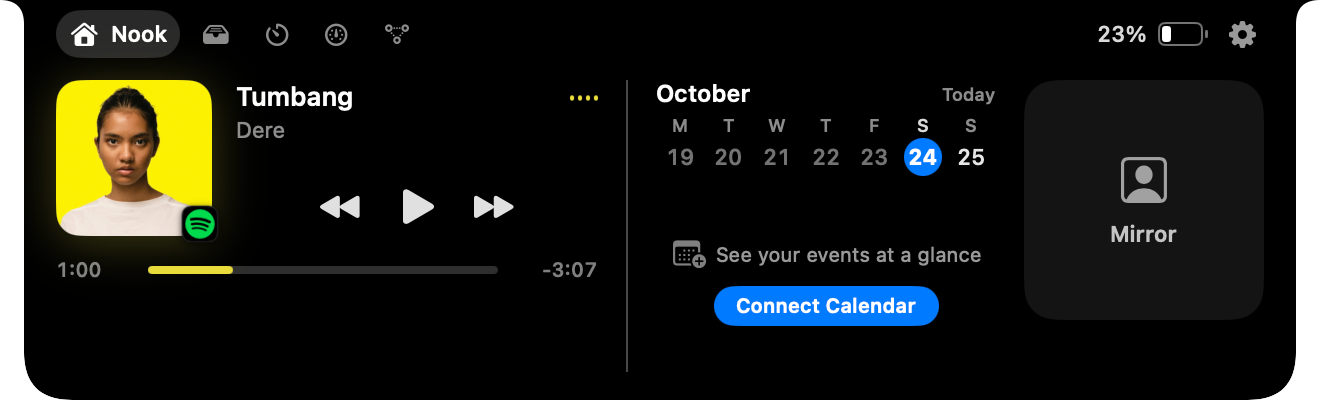
Musik, kalender, dan cermin.

Apa pun yang sedang diputar, lengkap dengan cover dan kontrol. Kalender minggu ini, termasuk Google Calendar. Cermin kamera untuk mengecek penampilan, bisa memotret dan merekam video.

Tab Nook: pemutar musik, kalender, dan cermin kamera
Now Playing

Bukan cuma Spotify.

ARNotch membaca pemutar media sistem, jadi video YouTube di browser pun ikut tampil.

SpotifyYouTubeApple MusicPodcast
Timer

Timer, alarm, dan Pomodoro.

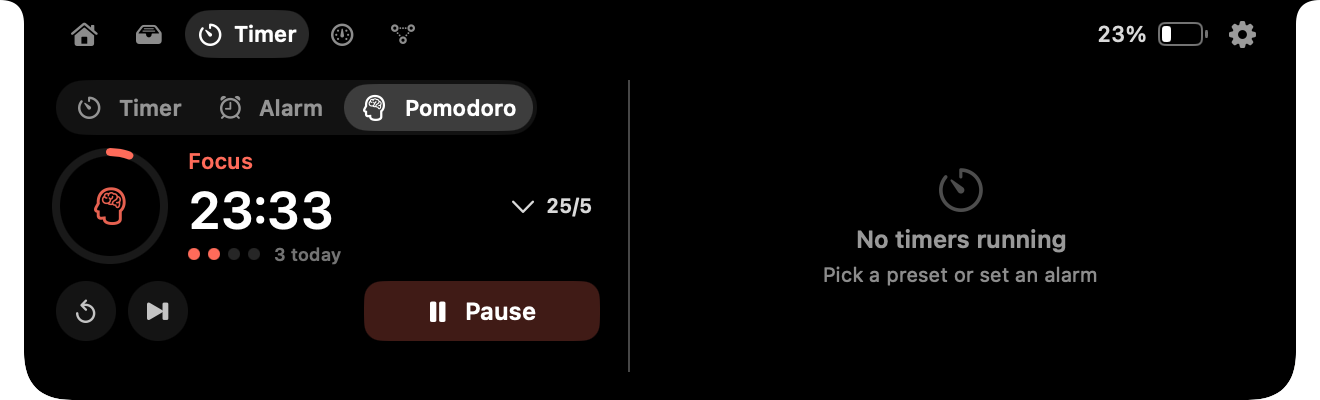
Timer sekali klik, alarm jam tertentu, dan siklus fokus 25/5. Sisa waktunya tetap terlihat walau notch ditutup.

Pomodoro yang sedang berjalan di ARNotch
Shelf

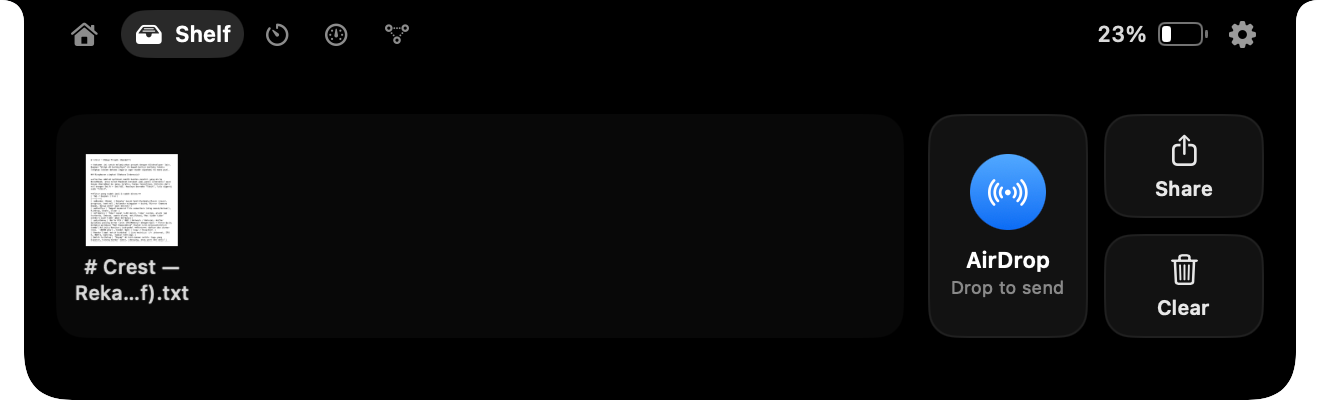
Tempat parkir file.

Seret PDF, gambar, atau teks ke notch. Ambil lagi kapan saja dengan menyeretnya keluar, atau kirim lewat AirDrop.

Tab Shelf ARNotch
System

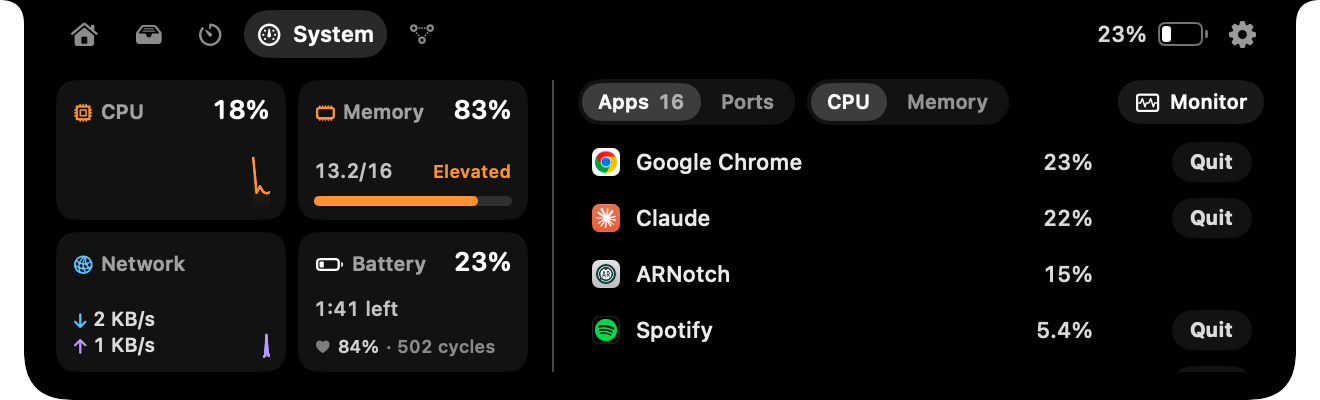
Tahu apa yang membuat Mac lambat.

CPU, RAM, kecepatan internet, dan kesehatan baterai (kapasitas dan jumlah siklus). Aplikasi yang paling boros tampil berurutan, dengan Quit dan Force Quit untuk yang hang.

Tab System: CPU, memori, jaringan, baterai, dan daftar aplikasi
Untuk developer

Port localhost di satu tempat.

Laravel, Node, MAMP, Valet. Buka di browser, salin URL untuk dites di HP, atau hentikan proses yang nyangkut.

Connect

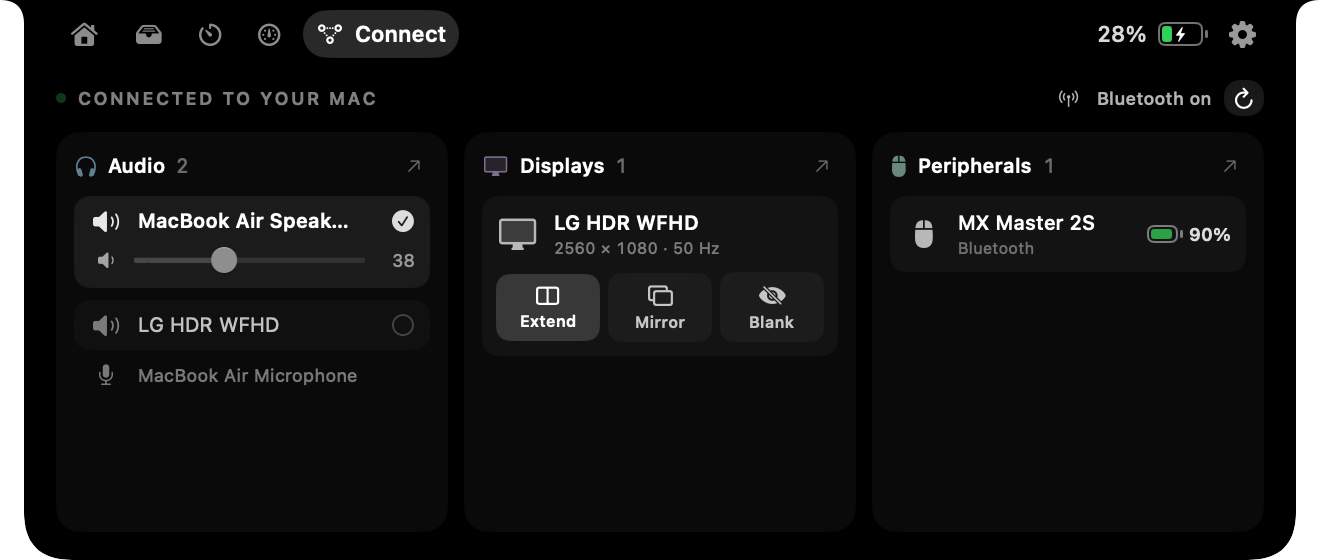
Perangkat yang tersambung.

Pindah output suara, atur monitor ke Extend atau Mirror, atau Blank untuk menghitamkan proyektor saat membuka catatan. Baterai mouse dan headset ikut terlihat.

Tab Connect dengan monitor LG dan mouse MX Master tersambung
Saat tertutup

Hanya muncul ketika perlu.

Notch melebar sedikit untuk info penting, lalu kembali seperti biasa.

Musik diputar
14:59
Timer atau alarm
›_
Server lokal aktif
Detail

Sebelum memasang.

Cara memasang

  1. Unduh ARNotch-1.0.0.dmg, lalu klik dua kali.
  2. Seret ARNotch ke folder Applications.
  3. Buka ARNotch. Jika macOS menolak, buka System Settings → Privacy & Security, lalu klik Open Anyway.
  4. Arahkan kursor ke notch. Aktifkan Launch at login di Settings agar selalu siap.

Yang perlu diketahui

  • Open-source (lisensi MIT), kode lengkap tersedia di GitHub.
  • Butuh macOS 14 Sonoma atau lebih baru. Di Mac tanpa notch, ARNotch membuat notch virtual.
  • Alarm tidak berbunyi saat laptop ditutup. Alarm yang terlewat ditandai begitu Mac bangun.
  • Kamera, mikrofon, kalender, dan Bluetooth baru diminta saat fiturnya dipakai.
  • Belum dinotarisasi Apple, jadi saat pertama dibuka perlu konfirmasi di Privacy & Security.
Logo ARNotch

Coba ARNotch.

Gratis, tanpa akun, open-source. Ukurannya cuma 2,2 MB.

macOS 14+ · Apple Silicon · Release v1.0.0

Proyek open source di GitHub. Ada saran atau menemukan bug? Kabari saya lewat adirp.id.

Kamis, 23 Juli 2026

AI in Open World Game Development 2026: 4 Breakthroughs Making Game Worlds More Realistic and Dynamic

Open world games have always promised freedom: exploring, experimenting, and shaping your own experience. But in 2026, the appeal of this genre is no longer just about vast maps—it’s about worlds that feel truly alive. This is where AI becomes the primary driver of change.

AI doesn't just help developers create games faster. This technology is beginning to transform how virtual worlds are built, how NPCs react, how environments adapt, and even how stories evolve alongside the player. The result is an open world that is more organic, responsive, and far from static.

How AI Creates Realistic and Dynamic Open Worlds

AI gives game studios new capabilities to build worlds that are not only large but also consistent, varied, and constantly changing. This approach makes exploration feel fresher because players are not just viewing pre-placed content, but interacting with systems that actively generate experiences.

Procedural Generation with AI for Unique Landscapes

Procedural generation is not new, but AI makes it far smarter. While older methods often produced areas large in size but repetitive in feel, AI can learn geographic patterns, biomes, city structures, and even object placement so that the world appears more natural.

With the help of AI models, mountains, forests, rivers, villages, and ruins can be shaped with more logical spatial reasoning. For example, AI can place settlements near water sources, create realistic trade routes, or tailor vegetation based on the climate of a particular region. This gives each area its own identity, rather than being a random result.

For developers, the biggest advantage is efficiency. The team doesn't have to design every corner of the map manually, yet can still maintain artistic quality through curation and creative direction.

AI-Based Adaptive Weather and Environmental Systems

Modern open worlds increasingly rely on environmental simulation. AI allows weather not only to change visually but also to affect ecosystems, NPC behavior, and player strategies.

For instance, heavy rain can make roads muddy and slow down vehicles, sandstorms diminish visibility, or winter trigger wildlife migration and changes in resident activities. AI can orchestrate these transitions dynamically based on location, time, and player actions.

The effect on immersion is substantial. The environment feels like a living, breathing system rather than a passive backdrop. Players are encouraged to adapt, not just memorize patterns.

The Smart NPC Revolution: More Lively Player Interactions

One classic weakness of open world games is NPCs that are numerous but shallow in behavior. In 2026, AI is driving a major shift by making non-player characters more contextual, responsive, and convincing.

AI for Real-Time Contextual Dialogue and Responses

NPCs no longer have to rely entirely on rigid dialogue trees. With AI support, they can respond to game conditions more naturally: commenting on the player’s reputation, recognizing recent events in town, or adjusting their tone based on the relationship already established.

This opens up opportunities for dialogue that feels personal. A guard might treat the player differently if they once helped his region, while a merchant may raise prices if the city is in crisis. Responses like these create the illusion that NPCs are genuinely paying attention to the world around them.

Although design boundaries are still needed to keep the narrative on track, AI makes interactions far more lively than traditional dialogue systems that easily feel repetitive.

NPC Behavior That Learns from Player Actions

Another important breakthrough is NPCs that can adjust their behavior based on patterns in the player’s actions. If the player is often aggressive, guards may become more alert. If the player is known for generosity, citizens might be more open to sharing information or offering help.

AI enables NPCs to build behavioral memory on both local and global scales. Not every character needs to “remember” everything, but this reputation and learning system is enough to create social consequences that feel genuine.

The impact extends beyond story and into gameplay. Players will feel that their choices leave a mark, giving even small decisions greater weight.

Performance Optimization and Open World Scalability

Creating a dynamic world demands significant resources. That’s why AI also plays an important behind-the-scenes role in keeping performance stable, especially as game worlds become denser and more complex.

AI for Intelligent Graphics Resource Management

AI can help the game engine determine which elements should be rendered in detail first. These systems can analyze camera focus, player movement speed, object density, and even the likely direction of upcoming exploration.

The result is that the game can allocate graphical power more efficiently. Areas the player is currently viewing appear at maximum fidelity, while other areas are optimized without a noticeable drop in quality. This approach is crucial for maintaining frame rates in sprawling open worlds.

Techniques such as AI-based upscaling, smart asset streaming, and computational load prediction also help the game run smoothly on a range of devices, from high-end PCs to modern consoles.

Dynamic Content Generation Without Heavy Processor Load

AI also enables the creation of dynamic content that doesn’t always need to be fully computed in real time. Some systems can generate mission variations, world activities, or crowd behavior using predictive, modular approaches, keeping processor loads more manageable.

This means the game can feel rich without having to simulate every corner of the world to an extreme degree at all times. Developers can choose which parts need to be fully active around the player, and which can simply be simplified in the background.

This is the key to scalability. The world can keep evolving without performance collapsing—an essential requirement for next-generation open world games.

The Future of AI in Open World 2026: From Unique Stories to Social Simulation

If AI already makes worlds more dynamic today, the next step is making each player’s experience increasingly unique. In this phase, AI is not just a production tool, but an engine that shapes the very identity of the game.

Integration of Generative AI for Personal Storylines

Generative AI opens up possibilities for more flexible and personal storytelling. Instead of all players going through almost identical plotlines, games can tailor conflicts, side missions, dialogue, and even character relationships based on playstyle and player decisions.

For example, a player who focuses on helping a certain faction might trigger different political conflicts than one who follows a criminal path. AI can weave these story variations together so they remain coherent, not just separate narrative branches.

The potential is enormous because replayability increases dramatically. Each playthrough can produce a story that feels more uniquely the player’s own.

AI for Complex Economies and Social Simulations

Another breakthrough lies in social world simulation. AI allows the in-game economy to react to supply, demand, regional conflicts, weather, and even player habits. Prices of goods, population migration, city stability, and inter-faction relationships can all change organically.

With such systems, the open world is no longer just a playground, but a simulation space with internal dynamics. Player actions can trigger resource shortages, shift the balance of power, or even create new social crises.

When implemented properly, AI will take open world games to a deeper level: not only vast to explore, but also complex to understand and influence.

FAQ

How does AI make open worlds feel more alive compared to traditional methods?

AI makes worlds react dynamically to the player, rather than just repeating the same scripts over and over. As a result, weather, NPCs, economy, and missions feel more contextual and less predictable.

What is the biggest challenge in implementing AI for open world games?

The main challenge is maintaining a balance between system complexity, performance, and the quality of the player experience. Overly heavy AI can burden hardware, while AI that is too free can disrupt design direction and narrative.

What are some examples of open world games that already use advanced AI?

Several modern games already use AI for NPC navigation, procedural generation, crowd behavior, and dynamic world systems, though the level of sophistication varies. Frequently discussed examples include series like Red Dead Redemption 2, Cyberpunk 2077, No Man's Sky, and Watch Dogs: Legion.

Can AI completely replace human level designers in the future?

Most likely not entirely. AI is very powerful for accelerating production and generating variety, but artistic vision, exploration pacing, and meaningful design decisions still require a human touch.

Source:
Open world game image source

This article was written by artificial intelligence (AI) using the deepseek-v4-pro model via SumoPod AI.

This article was translated by Artificial Intelligence (AI) using deepseek-v4-pro via SumoPod AI.

Rabu, 22 Juli 2026

5 Samsung Devices Set to Launch at Galaxy Unpacked 2026: Latest Leaked Specs & Prices

5 Samsung Devices Set to Launch at Galaxy Unpacked 2026: Latest Leaked Specs & Prices

Samsung is expected to heat up the premium gadget market once again at Galaxy Unpacked 2026. Several leaks point to new flagship lines, next-generation foldable devices, wearables, audio, and top-tier tablets. While official details are still awaiting Samsung's announcement, the launch pattern and circulating rumors already give a fairly clear picture of next year's refresh direction.

This article summarizes the 5 most anticipated Samsung devices at Galaxy Unpacked 2026, complete with leaked specs and the latest price ranges currently being widely discussed.

The New Flagship Lineup: Galaxy S26 Series

The Galaxy S series always steals the spotlight at the beginning of each year. For 2026, Samsung is predicted to bring improvements focused on performance efficiency, AI-based camera quality, and better battery endurance.

Galaxy S26 and S26 Plus – Camera and Battery Improvements

The Galaxy S26 and Galaxy S26 Plus are rumored to retain Samsung's signature minimalist design language, but with refinements under the hood. Leaks mention upgrades to the main sensor, nighttime image processing, and smoother video stabilization.

On the battery side, Samsung is expected to include a slightly larger capacity with optimizations from a more power-efficient chipset. This is crucial because flagship users now seek not only high performance but also all-day endurance for multitasking, gaming, and content consumption.

The widely discussed estimated specifications:

  • 120Hz AMOLED display with higher peak brightness
  • Next-gen main camera with AI processing
  • Larger battery compared to the previous series
  • Upgraded fast charging
  • Latest One UI based on the newest Android generation

As for pricing, the Galaxy S26 will likely open at Samsung's standard flagship range, while the S26 Plus is positioned slightly higher due to its larger screen and battery.

Galaxy S26 Ultra – More Advanced Display and Integrated S-Pen

The Galaxy S26 Ultra is predicted to remain the most premium model in the series. Its refresh focus is said to be on a more advanced display, possibly with better panel efficiency, even thinner bezels, and improved outdoor visibility.

The integrated S-Pen is almost certainly retained as it has become the identity of the Ultra line. Additionally, Samsung is likely to enhance its zoom camera capabilities, strengthen AI features for photo editing, and improve the cooling system so the device stays stable under heavy use.

The most frequent leaks for the Galaxy S26 Ultra include:

  • Premium AMOLED panel with adaptive refresh rate
  • More mature periscope camera system
  • Integrated S-Pen
  • Premium, lighter body material
  • Latest-generation flagship chipset

Regarding price, the Galaxy S26 Ultra is expected to remain in the ultra-premium class. Looking at previous trends, this model will likely be Samsung's highest-priced non-foldable device at launch.

Foldable Innovation: Galaxy Z Fold 7 and Z Flip 7

Samsung still leads the foldable phone market, and Galaxy Unpacked 2026 could be an important stage to showcase the maturity of their foldable technology. The two most anticipated models are, of course, the Galaxy Z Fold 7 and Galaxy Z Flip 7.

Galaxy Z Fold 7 – Thinner Foldable Display and New Hinge

The Galaxy Z Fold 7 is expected to arrive with a thinner body both when folded and unfolded. One of its main highlights is a new hinge design said to reduce the display crease while improving durability.

Samsung will also likely refine the cover screen ratio to make it more comfortable to use like a regular smartphone. At the same time, the main inner display is expected to remain large for productivity, multitasking, and entertainment needs.

Estimated key features of the Galaxy Z Fold 7:

  • Thinner and lighter design
  • New hinge with a far less visible crease
  • Stronger and more efficient main display
  • Cameras upgraded closer to the main flagship series
  • More mature multitasking support

The estimated price of the Galaxy Z Fold 7 will still be in the highest premium segment. Early rumors place it in a price range not far from previous generations, unless Samsung brings major hardware changes.

Galaxy Z Flip 7 – Compact Design with a Larger Cover Screen

The Galaxy Z Flip 7 is likely to continue targeting users who want a compact and fashionable foldable phone. The most interesting leak is a larger cover screen, making it more functional for replying to messages, viewing navigation, controlling music, or taking selfies without opening the device.

Samsung is also expected to improve the hinge and body durability so the Z Flip 7 feels more mature as a daily driver. In terms of performance, the latest chipset and software optimization are likely to be the main selling points.

Predicted features coming to the Galaxy Z Flip 7:

  • Larger and more useful cover screen
  • Even thinner foldable design
  • Better cameras for social media photos
  • More efficient battery
  • AI features for quick use on the outer screen

If Samsung stays aggressive, the Z Flip 7 price has the potential to be more competitive than the Fold 7 and remain the most attractive entry point to Samsung's foldable phone ecosystem.

Wearable and Audio Ecosystem

Beyond smartphones, Samsung usually strengthens its companion device ecosystem. 2026 is expected to be an important moment for smarter, more accurate, and more connected wearables.

Galaxy Watch 8 and Galaxy Buds 4 – Health Features & Connectivity

The Galaxy Watch 8 is likely to bring improved health sensors, battery efficiency, and AI integration for more personalized fitness analysis. Features like sleep tracking, heart rate, stress, and daily activity monitoring are almost certain to remain the main focus.

Meanwhile, the Galaxy Buds 4 are predicted to arrive with better audio quality, more effective active noise cancellation, and even smoother connectivity among Galaxy devices. Samsung appears to continue pushing the ecosystem experience, such as automatic audio switching from a phone to a Galaxy tablet or laptop.

Leaked features that may be present:

  • More precise health sensors on the Galaxy Watch 8
  • Improved battery life
  • Deeper integration with Samsung Health
  • Better microphone quality and ANC on the Galaxy Buds 4
  • Quick pairing and stable connection across various Galaxy devices

Galaxy Ring 2 – More Accurate Health Tracker

After the smart ring wearable market started gaining attention, the Galaxy Ring 2 is expected to arrive as a refinement of the first generation. Its main focus is likely on health tracking accuracy, wearing comfort, and battery endurance.

This device could be an attractive option for users who want to monitor their health without always having to wear a smartwatch. If these rumors are true, Samsung will expand its health ecosystem with a lighter and more practical approach.

Estimated Galaxy Ring 2 improvements:

  • More accurate sleep and body recovery sensors
  • Design more comfortable for daily wear
  • Better synchronization with Samsung Health
  • Longer-lasting battery
  • AI-based health analytics

Premium Tablets: Galaxy Tab S10 Series

Samsung is also predicted to bring a new premium tablet line for creative and professional users. The Galaxy Tab S10 Series is likely to arrive as an answer to the increasing need for mobile productivity.

Galaxy Tab S10 Ultra – 14.6-Inch Display with the Latest Chipset

The Galaxy Tab S10 Ultra is expected to still rely on a large 14.6-inch display as its main attraction. This size is ideal for editing, design, watching, and multitasking with split-screen mode.

With the latest chipset, this tablet will likely offer high performance for heavy workloads. Samsung could also strengthen the DeX experience, keyboard support, and stylus to make the Tab S10 Ultra even more capable of replacing a laptop in certain scenarios.

Circulating leaked specifications:

  • 14.6-inch AMOLED display
  • Latest flagship chipset
  • S-Pen support
  • High performance for creators and professionals
  • Large battery with fast charging

For pricing, the Galaxy Tab S10 Ultra is almost certainly in the premium category, in line with its position as an Android tablet

Source:

This article was written by artificial intelligence (AI) using the deepseek-v4-pro model via SumoPod AI.

This article was translated by Artificial Intelligence (AI) using deepseek-v4-pro via SumoPod AI.

Selasa, 21 Juli 2026

Galaxy Unpacked 2026: Z Fold8, Fold8 Ultra, & Flip8 Officially Debut – Price, Specifications, & Latest Innovations

Galaxy Unpacked 2026: Z Fold8, Fold8 Ultra, & Flip8 Officially Debut – Price, Specifications, & Latest Innovations

Samsung once again heats up the foldable phone market through Galaxy Unpacked 2026 with three main stars: Galaxy Z Fold8, Galaxy Z Fold8 Ultra, and Galaxy Z Flip8. This year's focus is clear—more mature design, deeper AI integration, and durability that becomes a more serious selling point than previous generations.

For foldable enthusiasts, this latest lineup is appealing not only because of specification updates but also because Samsung is beginning to differentiate its product segments more decisively. Fold8 serves as an all-round flagship foldable, Fold8 Ultra targets premium users seeking the best display, camera, and maximum productivity, while Flip8 remains the most compact option with a stronger lifestyle touch.

Galaxy Unpacked 2026 Schedule & Highlights

Galaxy Unpacked 2026 became one of the most anticipated tech events as it marks a new direction for the Samsung foldable ecosystem. In addition to phones, the event also highlighted device integration with Galaxy AI, wearables, and cross-screen multitasking experiences.

Date, Location, & How to Watch the Livestream

Samsung held Galaxy Unpacked 2026 as a global event broadcast live through its official channels, including Samsung's website, YouTube, and official social media. This format makes it easy for fans in various countries to follow product announcements in real time without having to attend the physical location.

For viewers in Indonesia, the broadcast can usually be watched through the Samsung Indonesia YouTube channel or the Samsung global newsroom page. If you want to follow all launch details, it's best to activate reminders on official channels a few hours before the event starts.

Full List of Devices Announced

The main spotlight naturally falls on the three latest foldable devices:

  • Samsung Galaxy Z Fold8
  • Samsung Galaxy Z Fold8 Ultra
  • Samsung Galaxy Z Flip8

In addition, Samsung usually also introduces software updates, the latest Galaxy AI features, and possibly supporting accessories such as styluses, cases, or wearable devices that complement the Galaxy ecosystem experience.

Leading Specifications of Samsung Z Fold8 & Fold8 Ultra

This year's Fold line shows a more aggressive approach. Samsung not only refines hinge design and body thinness but also enhances display quality, cameras, and power efficiency to address criticisms that have appeared in previous generations.

Display, Camera, & Battery – What's New?

Galaxy Z Fold8 is expected to bring a brighter main screen with an even fainter crease, making the reading, watching, and multitasking experience feel more natural. The cover screen is also made more proportionate so it’s comfortable to use like a regular smartphone when the device is closed.

For cameras, Samsung seems serious about improving photography quality on the Fold line. Fold8 is said to arrive with a better main sensor, smarter AI-based image processing, and more stable low-light performance. This is important because for several generations, the camera sector on the Fold series was often considered not yet on par with Samsung's non-folding flagships.

On the battery side, efficiency gains likely come from a combination of a new-generation chipset and software optimization. The result is not just a larger capacity but more consistent endurance for multitasking, video calls, and daily productivity.

Fold8 Ultra goes a step further with a more premium hardware package. This variant is positioned as the highest model, so it’s reasonable if it brings a superior display, more competitive cameras, and possibly additional productivity features for high-end users.

Key Differences Fold8 vs Fold8 Ultra

The biggest differences between Galaxy Z Fold8 and Fold8 Ultra lie in their product positioning. Fold8 is aimed at users who want a balanced flagship foldable, while Fold8 Ultra targets those who want a "no compromises" experience.

Some of the most likely key differentiators:

  • Camera: Fold8 Ultra potentially uses a larger main sensor and better zoom capability.
  • Display: Ultra likely offers a panel with superior brightness, color accuracy, or size.
  • Material: Fold8 Ultra could use a more premium and lighter body material.
  • Productivity: There is a chance stylus features or deeper multitasking software are enhanced on the Ultra model.
  • Price: Fold8 Ultra almost certainly sits at the highest price tier in Samsung's 2026 foldable lineup.

If Fold8 is the rational choice for power users, then Fold8 Ultra is the option for those who want the most complete flagship foldable experience.

Samsung Galaxy Z Flip8 Surprises

Amid the dominance of the Fold series, Galaxy Z Flip8 still holds great appeal because it combines a compact design, fashionable character, and practical camera features for daily needs and social media content.

Design, Flex Mode Features, & Camera Upgrades

Samsung seems to continue polishing Flip's identity as a fun yet functional foldable phone. Galaxy Z Flip8 is expected to arrive with a thinner design, neater hinge, and a cover screen that is more useful for replying to messages, controlling music, checking navigation, or taking selfies without opening the device.

Flex Mode remains a key selling point. With a hinge that can hold various angles, users can make video calls, record hands-free content, or watch videos in a practical semi-folded position. This is one of the unique advantages that regular slab smartphones have yet to fully replicate.

In the camera sector, the most noticeable improvements are likely in software image processing and main sensor quality. Night photo results, video stabilization, and cover display selfies are expected to be the areas most improved.

Official Price & Availability in Various Countries

Galaxy Z Flip8 is positioned as a more affordable foldable option compared to the Fold series. Although it remains in the premium category, its price is usually far more accessible for users wanting to try a foldable phone without entering the Ultra price level.

Availability is generally opened gradually in key markets such as South Korea, the United States, Europe, and then Asian countries including Indonesia. Pre-order and first sale schedules may differ in each region, depending on local Samsung distribution strategies.

Comparison with Previous Generation

The updates in the 2026 generation are not merely cosmetic. Samsung appears to be addressing three things most often discussed by users: device thickness, camera quality, and long-term durability.

Significant Upgrades from Z Fold7 / Flip7

Compared to Z Fold7, Fold8 and Fold8 Ultra likely bring improvements in:

  • thinner and lighter design,
  • an even less visible screen crease,
  • camera performance closer to the Galaxy S Ultra series,
  • better battery efficiency,
  • and more mature multitasking software.

Meanwhile, compared to Z Flip7, Z Flip8 is expected to excel in:

  • a more functional cover screen,
  • more consistent camera quality,
  • a stronger hinge,
  • and a smoother Flex Mode experience.

These improvements are important because the foldable market is no longer just chasing the "unique" factor but also demanding a truly mature flagship experience.

Is It Worth Upgrading? Performance & Durability Analysis

If you are a Z Fold6 user or older, upgrading to Fold8 or Fold8 Ultra feels quite reasonable—especially if you want a better camera, thinner body, and a more comfortable multitasking experience. For Fold7 users, the upgrade decision will depend more on how much you need camera improvements or Ultra features.

For users of older Flip generations, Z Flip8 could be an interesting upgrade if you frequently use the camera, cover display, or want a more refined design. However, if you already use Flip7 and are still satisfied with its performance, an upgrade may not feel urgent unless there is a new feature that is highly relevant to your daily needs.

Overall, the 2026 generation appears more mature. Samsung is not only perfecting the foldable concept but also striving to make it more durable, more practical, and more worthy as a long-term primary device.

FAQ

When does Galaxy Unpacked 2026 take place?

Galaxy Unpacked 2026 takes place in a global event format broadcast online through Samsung's official channels. The exact schedule follows Samsung's official announcements for each region, so viewers should monitor Samsung's official newsroom and YouTube.

What is the price of Samsung Z Fold8 and Fold8 Ultra?

Samsung positions Z Fold8 as a premium foldable flagship, while Fold8 Ultra is at a higher price level. Official prices may differ in each country due to taxes, memory configurations, and local distribution policies.

What are the most prominent new features in Z Flip8?

The most prominent features in Z Flip8 are design refinements, increasingly useful cover screen functions, and camera improvements. Flex Mode also remains a key attraction for hands-free use and content creation.

Does Galaxy Z Fold8 Ultra have major differences compared to Fold8?

Yes, Fold8 Ultra is positioned as a more premium version focusing on camera, display, materials, and productivity. If Fold8 is the main flagship model, then Ultra is intended for users who want the highest specifications with few compromises.

Source: Source

This article was written by artificial intelligence (AI) using the deepseek-v4-pro model via SumoPod AI.

This article was translated by Artificial Intelligence (AI) using deepseek-v4-pro via SumoPod AI.

Jumat, 17 Juli 2026

7 Benefits of Cloud AI for Big Data Processing in 2026 (Faster, Cost-Efficient, and Scalable)

7 Benefits of Cloud AI for Big Data Processing in 2026 (Faster, Cost-Efficient, and Scalable)

In 2026, the business need to process massive amounts of data continues to rise. The problem is that massive data volumes often demand expensive infrastructure, long processing times, and large technical teams. This is where cloud AI becomes an increasingly relevant solution: combining the flexibility of cloud computing with artificial intelligence to process, analyze, and derive insights from big data more quickly.

For companies that want to move nimbly, cloud AI is no longer just an additional technology option. It has become an essential foundation for real-time analytics, decision automation, and operational cost efficiency.

What Is Cloud AI and Why Is It Important for Big Data?

Cloud AI refers to AI services running on cloud infrastructure. With this approach, companies can leverage machine learning, predictive analytics, computer vision, NLP, and large-scale data processing without having to build entire systems from scratch in their own data centers.

The Definition of Cloud AI and How It Differs from Traditional Cloud Computing

Traditional cloud computing focuses on providing resources such as servers, storage, databases, and networking online. Cloud AI goes further by adding intelligent services, such as ready-to-use AI models, automated data pipelines, model training, real-time inference, and orchestration of analytical workloads.

The main difference lies in the added value. While ordinary cloud computing provides a "place" to run applications, cloud AI provides the ability to understand data, recognize patterns, and generate recommendations automatically. This is crucial when the data being processed is not only large but also complex and constantly changing.

The Role of Cloud AI in Accelerating Real-Time Big Data Analysis

Big data often comes from many sources at once: transactions, IoT sensors, mobile applications, social media, server logs, and ERP systems. Cloud AI helps merge this data into pipelines that can be processed in real time or near real time.

With the support of distributed computing and AI models running in the cloud, businesses can detect patterns faster, respond to anomalies in seconds, and make data-driven decisions without waiting for manual reports that take hours or days.

Main Benefits of Cloud AI for Businesses in 2026

Here are the seven main benefits of cloud AI for big data processing in 2026.

1. Much Faster Data Processing

Cloud AI allows companies to leverage massive computing resources on demand. Processes that previously took hours can be accelerated to minutes, especially for large-scale analytics, data classification, or AI model-based predictions.

This speed is critical for sectors that rely on fast decisions, such as finance, e-commerce, manufacturing, and healthcare.

2. Elastic Scalability and Infrastructure Cost Savings

One of the greatest advantages of cloud AI is elastic scalability. Companies can add or reduce computing capacity according to workload spikes without having to buy new servers.

The usage-based cost model also helps businesses avoid large upfront investments. Instead of spending huge budgets on hardware, companies only pay for the resources they actually use. This makes AI experimentation and big data projects more financially realistic.

3. Parallel Processing Capability for Massive Data Volumes

Cloud AI supports parallel processing, i.e., splitting work across many nodes or machines simultaneously. This approach is very effective for big data that arrives in high volumes and diverse formats.

Parallel Processing Capability for Massive Data Volumes

With this architecture, companies can run model training, ETL, batch analysis, and data inference at a scale difficult to achieve with ordinary on-premise infrastructure. The results are higher throughput and shorter wait times.

4. More Accurate Real-Time Analytics

Cloud AI is not only fast but also intelligent. Systems can process streaming data while running predictive models to detect trends, risks, or opportunities in real time.

For example, retailers can monitor changes in purchasing behavior during an ongoing campaign, while fintech companies can detect suspicious transactions instantly.

5. Automation of Data Pipelines and Operations

Many big data processing tasks are repetitive: data cleaning, labeling, classification, data quality monitoring, and reporting. Cloud AI helps automate these processes so that data teams can focus on strategy rather than manual work.

Automation also reduces human error and accelerates the cycle from raw data to ready-to-use insights.

6. Access to Advanced AI Technology Without Building from Scratch

By 2026, many cloud AI platforms offer ready-to-use models, APIs, and analytical tools. This means companies do not always have to hire large AI research teams to get started.

This easier access lowers adoption barriers. Even mid-sized businesses can leverage NLP, anomaly detection, forecasting, or vision AI for their big data needs.

7. Easier Cross-Team Collaboration

Because everything runs in the cloud, data engineers, data analysts, data scientists, and business teams can work on the same platform. Dashboards, models, datasets, and pipelines can be accessed with centralized permission controls.

Smoother collaboration accelerates experimentation, insight validation, and the implementation of data-driven decisions throughout the organization.

Security and Compliance Strengths in Cloud AI

In addition to performance and efficiency, security is a primary consideration in big data processing. Modern cloud AI is generally designed with more mature protection features than ad-hoc approaches in on-premise environments.

End-to-End Data Encryption and Automatic Anomaly Detection

Cloud AI platforms typically provide end-to-end data encryption, both at rest and in transit. This helps protect sensitive information from unauthorized access.

Moreover, AI can also be used to automatically detect security anomalies. For example, the system can recognize unusual access patterns, suspicious traffic spikes, or user behavior that deviates from the normal baseline.

Regulatory Support (GDPR, HIPAA) in AI-as-a-Service Architecture

Regulatory compliance is becoming increasingly important, especially for healthcare, finance, and global enterprises. Many cloud AI providers offer audit controls, data residency, identity management, logging, and governance features that help companies meet standards such as GDPR and HIPAA.

However, compliance responsibility remains shared. The cloud provider supplies the technical foundation, while the company must ensure that configuration, access management, and data usage are done correctly.

Real-World Case Studies: Cloud AI in Action

To make it more concrete, here are two examples of cloud AI applications for big data processing that are relevant in 2026.

Market Trend Prediction with Cloud AI-Based Sentiment Analysis

Retail companies and consumer goods brands now collect data from social media, customer reviews, forums, and customer service channels. With cloud AI, this unstructured data can be analyzed at scale using NLP to read sentiment, dominant topics, and changes in market perception.

As a result, businesses can detect product trends earlier, evaluate campaign impact, and respond to customer complaints before they become larger reputational crises.

Logistics Optimization Using Big Data Batch Processing

Logistics companies often process historical delivery data, routes, weather, fuel consumption, fleet capacity, and warehouse performance. Through cloud AI, this data can be processed in large-scale batches to find efficiency patterns.

AI models then help recommend the best routes, more accurate delivery time estimates, and more cost-efficient fleet allocation. At a large scale, small improvements like these can yield significant operational savings.

FAQ

How Does Cloud AI Help Reduce Big Data Processing Costs?

Cloud AI reduces the need for initial hardware investment because companies only use resources as needed. Operational costs are also more efficient because scale can be flexibly increased or decreased.

Can Cloud AI Be Integrated with Existing Big Data Systems?

Yes, most cloud AI platforms support integration with existing data lakes, warehouses, APIs, and ETL pipelines. This facilitates gradual migration without having to replace entire systems at once.

How Secure Is Data Processed by Cloud AI Platforms?

Cloud AI platforms generally provide encryption, access controls, logging, and automatic threat monitoring. However, the level of security still depends on configuration, access policies, and data governance from the user company.

What Are the Technical Requirements to Start Using Cloud AI for Big Data?

At minimum, companies need to have a clear data source, cloud connectivity, an integration pipeline, and a specific use case goal. Teams should also prepare data management, security controls, and monitoring tools so that implementation runs stably.

Closing

Cloud AI offers a combination that modern businesses desperately need: speed, cost efficiency, scalability, and analytical intelligence. For big data processing in 2026, this technology not only helps companies cope with the explosion of data volume but also turns data into faster and more precise decisions.

For organizations that want to stay competitive, the best step is not simply collecting more data, but ensuring that data is processed intelligently. And that is where cloud AI demonstrates its true value.

This article was written by artificial intelligence (AI) using the deepseek-v4-pro model via SumoPod AI.

This article was translated by Artificial Intelligence (AI) using deepseek-v4-pro via SumoPod AI.

Selasa, 14 Juli 2026

7 Advantages of AI Face Recognition in 2026 Smart Home Security Systems

7 Advantages of AI Face Recognition in 2026 Smart Home Security Systems

Home security technology continues to advance rapidly, and by 2026, AI face recognition is becoming one of the most prominent features in the smart home ecosystem. More than just a "keyless entry," this technology offers instant occupant identification, more precise access control, and intelligent notifications when suspicious activity occurs.

For homeowners, the main advantages are not only about convenience but also faster response, access personalization, and increasingly mature data protection. Here are 7 advantages of AI face recognition in 2026 smart home security systems that are worth understanding before choosing a device.

Why AI Face Recognition Is Becoming the Key to Smart Home Security?

AI face recognition is becoming important because modern home security systems can no longer just record events. An ideal system must be able to recognize who is arriving, distinguish residents from strangers, and make automatic decisions in seconds.

Comparison with traditional security systems (locks, regular CCTV)

Traditional systems like mechanical locks, PINs, or regular CCTV have fairly obvious limitations. Keys can be lost or duplicated, PINs can be leaked, and conventional CCTV typically only records without truly understanding who is being recorded.

In contrast, AI face recognition adds a more personal biometric verification layer. The system not only "sees" but also "recognizes." This makes entry more secure and practical, especially for homes with many occupants, children, elderly, or household staff.

The first advantage is contactless and keyless access. You no longer need to look for keys or open an app every time you arrive home. Simply stand in front of the device, and the system will verify your face and grant access if there is a match.

The second advantage is lower risk of human error. Many home security incidents occur because doors are forgotten to be locked, keys are left behind, or access codes are shared carelessly. AI face recognition reduces reliance on error-prone manual habits.

Speed and accuracy of facial identification in 0.2 seconds

One reason this technology is quickly adopted is its ever-improving performance. In the latest 2026 devices, facial identification can take about 0.2 seconds, making the user experience feel nearly instant.

The third advantage is real-time response speed. The system can immediately unlock the door for registered residents or send an alert when detecting an unfamiliar face. In a security context, a split‑second difference can be very meaningful.

The fourth advantage is continuously improving identification accuracy. With better sensors and increasingly mature AI models, the system can recognize faces in various lighting conditions, angles, and minor appearance changes. This makes smart home security feel more reliable than previous generations.

How AI Face Recognition Works in Smart Home Devices

Behind its simplicity, AI face recognition works through a combination of cameras, depth sensors, AI processing, and an access management system. The device captures a face, extracts unique features, then matches them with registered data.

Deep learning algorithms for facial feature recognition

Modern systems use deep learning algorithms to read facial patterns such as the distance between eyes, nose contour, jaw shape, and even certain textures that are difficult to forge. This data is then converted into a biometric template, not just an ordinary photo.

The fifth advantage is the ability to learn and adapt. AI not only recognizes a face from one static image but from various expressions, angles, and environmental conditions. As a result, the system is more consistent when used daily.

Some devices are also equipped with liveness detection, the ability to detect whether the object in front of the camera is a real human, not a photo, video, or digital screen. This feature is very important for enhancing the security of the home's main access.

Encryption of biometric data and local vs. cloud storage

Facial data is sensitive, so digital security aspects cannot be ignored. The best devices in 2026 generally already use end‑to‑end encryption or advanced encryption to protect user biometric templates.

The sixth advantage is stronger data protection through encryption and flexible storage options. Some products store data locally on the device or home hub, while others offer cloud synchronization for convenience of access and backup.

Local storage usually excels in privacy because little data moves to external servers. Meanwhile, cloud storage can provide ease of updates, access history, and cross‑device integration. The best choice depends on your priority: maximum privacy or usage flexibility.

Superior Features of Face Recognition‑Based Smart Home Security

AI face recognition is not just a door opener. In a mature smart home system, this technology becomes the center of smarter access control and security monitoring.

Access control with multi‑user and temporary guests

One of the most useful features is multi‑user management. You can register family members' faces, restrict access for household workers at certain hours, or grant temporary access to guests without handing over physical keys.

The seventh advantage is highly flexible and personalized access control. For example, children can enter after school hours, a technician is only active during service times, and overnight guests receive 24‑hour permission. Everything can be managed from the app with neat access logs.

This feature greatly helps dynamic modern homes. You don't need to change locks or share permanent codes just for temporary needs.

Anomaly notifications: detection of unknown faces or manipulation attempts

AI‑based security systems also excel at detecting anomalies. When the camera sees an unregistered face, the device can immediately send a notification to a phone, sound an alarm, or trigger other cameras to start recording.

Some devices can even recognize tampering attempts, such as camera covering, intentionally extreme lighting, or spoofing attempts using visual media. This makes the system not passive, but actively respon to potential threats.

In practice, smart notification features help homeowners take faster action. You can immediately check the live view, talk back through certain devices, or contact neighbors and security officers if necessary.

Guide to Choosing the Best Face Recognition Smart Home Security Products in 2026

Choosing the right product is not just about brand or design. You need to assess camera quality, device durability, data security, and compatibility with the smart home ecosystem already in use at home.

Important specifications: camera resolution, IR, and weather resistance

Prioritize devices with sharp camera resolution so facial recognition remains accurate. Good resolution helps the system capture facial details more consistently, especially in entryway areas with changing light.

IR or infrared sensors are also important for night‑time use or shaded areas. With good IR support, the device can still recognize faces in low‑light conditions without drastically reducing accuracy.

If the device is installed outdoors, pay attention to weather resistance certification such as resistance to heat, rain, dust, and humidity. A sophisticated smart lock or door camera will be less useful if it quickly malfunctions due to environmental exposure.

Additionally, check unlock speed, liveness detection support, storage capacity, as well as backup battery or emergency power options. Small details like these often determine long‑term user comfort.

Integration with smart home ecosystems (Google Home, Alexa, Apple HomeKit)

Ideally, the best 2026 products do not stand alone. Choose devices that can connect to Google Home, Alexa, or Apple HomeKit so home automation runs more smoothly.

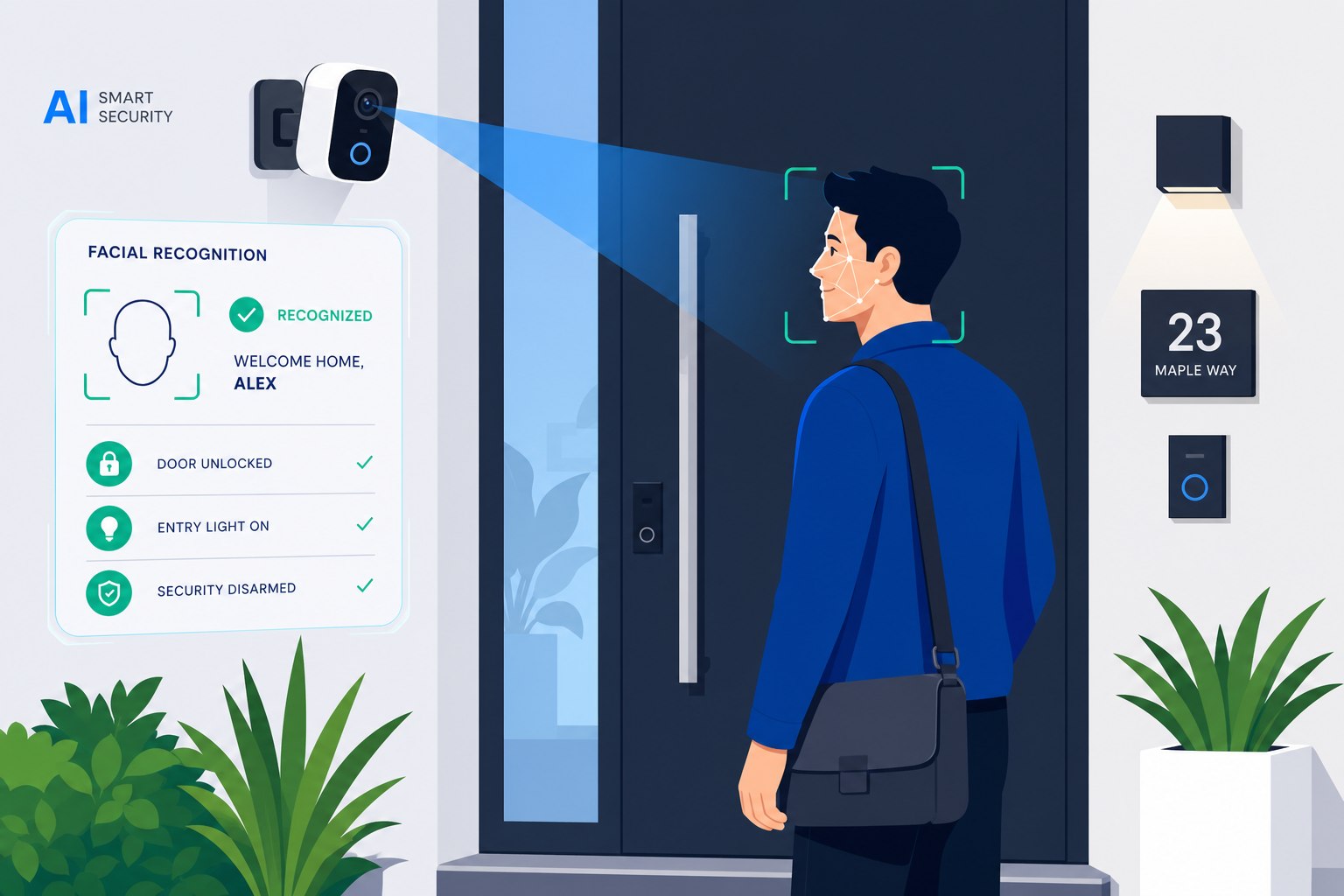
For example, when a resident's face is recognized, the system can simultaneously unlock the smart lock, turn on the foyer lights, activate the AC, and disarm the home alarm. Such integration makes security and convenience work together.

Also make sure the supporting app is stable, easy to use, and regularly receives firmware updates. A product with excellent AI but poor software will feel cumbersome in daily use.

FAQ

Can AI face recognition be fooled with a photo or video?

It can happen on older systems or cheap devices that lack liveness detection. However, on better 2026 products, depth sensors, IR, and micro‑motion detection usually make it much harder to use photos or videos to trick the system.

How does the system handle facial changes (glasses, beard, mask)?

Most modern systems can still recognize minor changes like glasses, hairstyles, or beards. If changes are too drastic, users usually need to update their facial data to maintain optimal accuracy.

Is my facial data safe from hacking or misuse?

Safety heavily depends on the chosen product. Select devices with strong encryption, good app authentication, and local storage options if you want stricter privacy control.

What is the price range for smart locks with AI face recognition in 2026?

Generally, the price range is expected to start from mid‑range around several million rupiah up to tens of millions for premium models. Price is usually influenced by sensor quality, AI features, smart home integration, and device materials.

Closing

AI face recognition in 2026 smart home security systems offers more than just a new way to open doors. This technology delivers keyless access, super‑fast identification, multi‑user control, anomaly detection, and increasingly mature data protection.

If you want to improve home security while maintaining resident comfort, face recognition‑based smart home devices deserve to be on your priority list. The key is to choose products that are accurate, secure, durable, and truly compatible with your smart home ecosystem.

Source:
https://source.unsplash.com/featured/?smart,home

This article was written by artificial intelligence (AI) using the deepseek-v4-pro model via SumoPod AI.

This article was translated by Artificial Intelligence (AI) using deepseek-v4-pro via SumoPod AI.

Dosen Teknik Informatika di UBP Karawang sekaligus Programmer Freelance. Menggabungkan riset akademis di bidang AI & Machine Learning dengan pengembangan solusi teknologi nyata untuk industri.

Cari Blog Ini

Diberdayakan oleh Blogger.

Arsip Blog